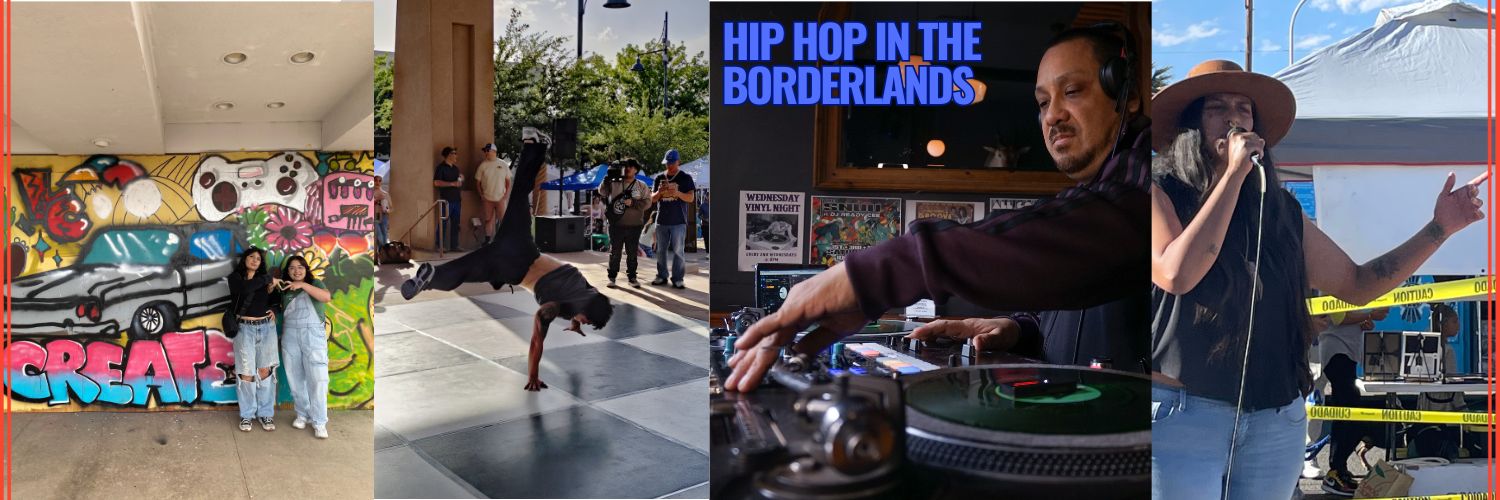
In the 1970s, the people of the Bronx neighborhood experienced arson and other violations as business people and politicians tried to move the Black and Latino residents of this borough out to make room for a major highway and more commercial opportunities. This repression and violence created the environment in which youth gathered together for safety and a semblance of joy. The cultural art form that grew from these conditions is based on five original active elements: MCing, Breaking, DJing, Graffiti/Aerosol Art and Knowledge which created an opening for the addition of other elements including beatboxing, beat making and fashion. After celebrating 50 years, we see that Hip Hop has manifested itself all over the world from similar pressures, no less in the Borderlands. This unit will include the stories and resources that help compose Hip Hop’s place in the desert. This unit was created in collaboration with hip hop practitioners and local academic institutions in the borderlands community.
Unit Lessons
Create a google map that pins, marks and shows photos of the known murals in the community. Analyze the artists, locations and reflections associated with those murals.
Create an artistic representation that shows student experiences of Hip Hop in the Borderlands using elements/symbols from the culture and the community.
Compare and contrast the aesthetic and principles of Hip Hop with the aesthetic and principles of your local culture.
Questions
Compelling Question: Is there Hip Hop in the Borderlands? How does it create a narrative for untold stories?
Staging the Question: What is Hip Hop? What do you know about Hip Hop?
Supporting Question 1:What conditions created Hip-Hop in the Bronx community in the 1970s?
Supporting Question 2: Which of the 5 elements of Hip Hop have you seen or experienced in your community?
Supporting Question 3: How can you map Hip Hop in the Borderlands?
9-12.US.86. Assess how social policies and economic forces offer privilege or systemic inequity in accessing social, political, and economic opportunity for identity groups in education, government, healthcare, industry, and law enforcement.
9-12.ECI.9. Present adaptations of arguments and explanations that feature evocative ideas and perspectives on issues and topics to reach a range of audiences and venues outside the classroom using print and oral technologies and digital technologies.
9-12.Econ.23. Analyze how national and global economic trends, practices, and policies impact the state and local economies in New Mexico.
9-12.Econ.25. Evaluate the impact of environmental externalities in New Mexico’s communities.
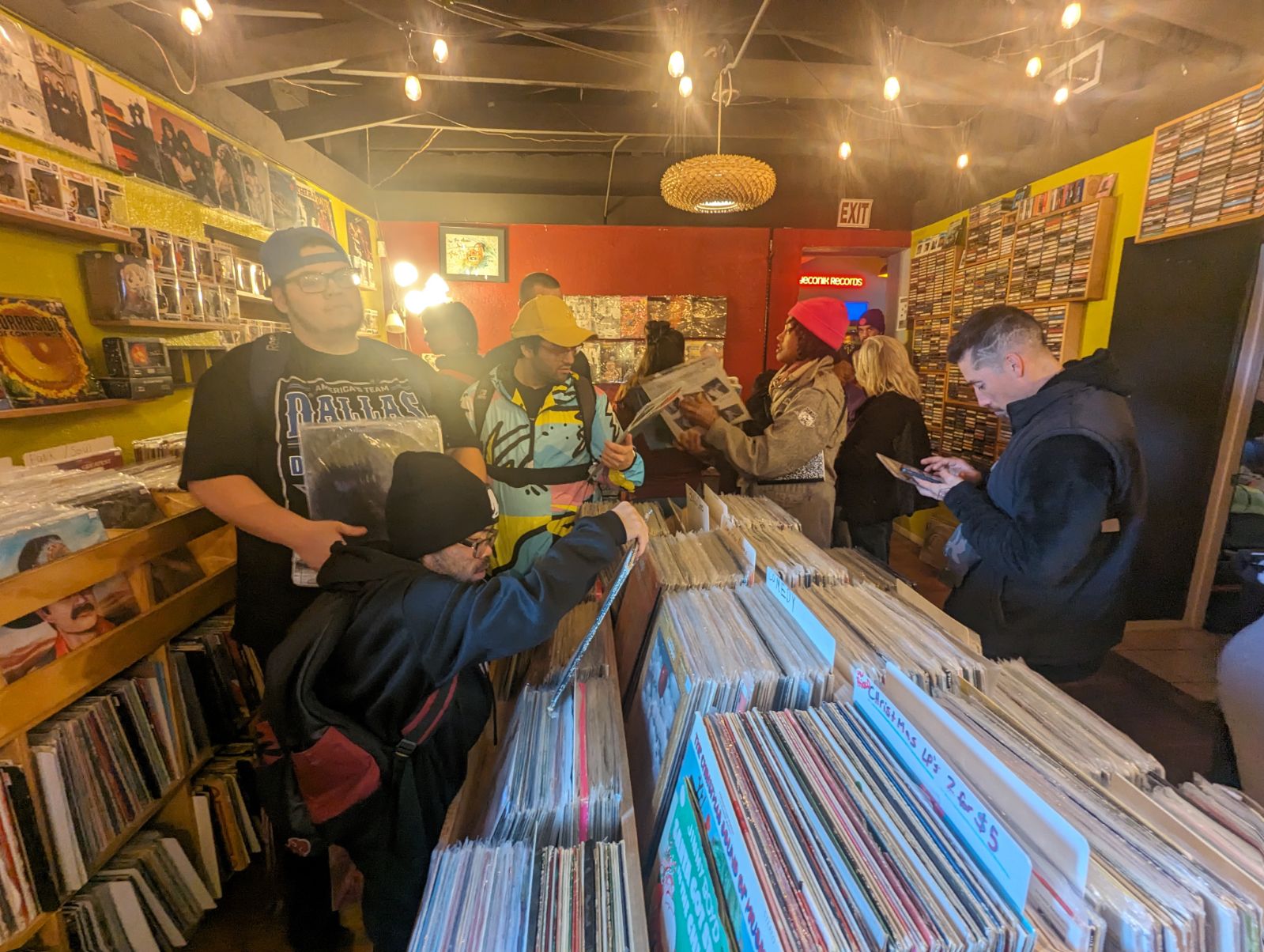
Youth search for vinyl records to make beats with at Eyeconik Records with the Learning Action Beat Buffet Hip Hop program in Las Cruces, New Mexico, January 2024.
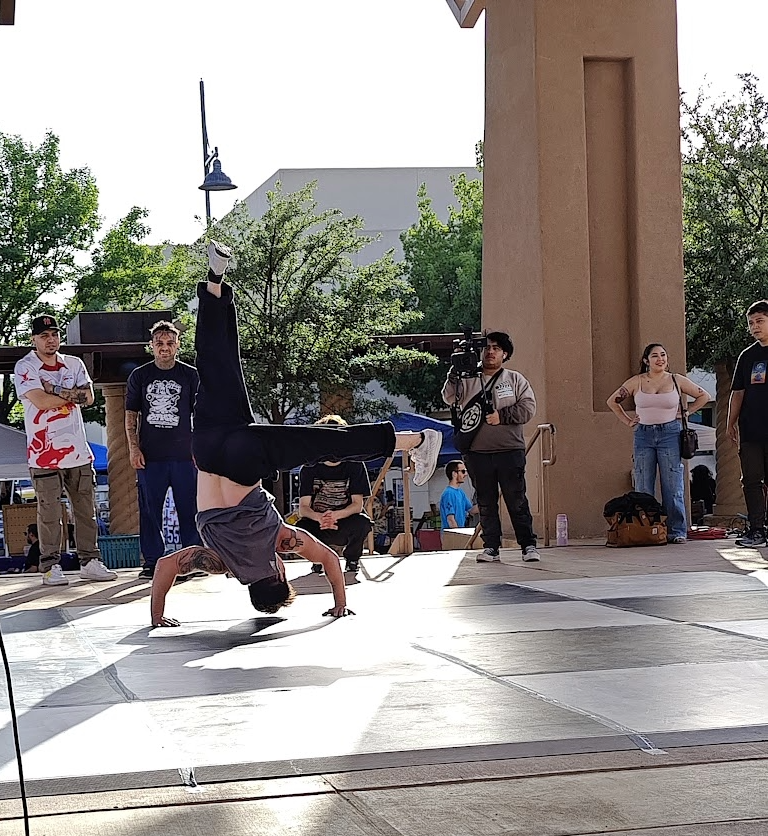
Bboy Ricky Sr. at the Cross City Cypher Breakdance event in May 2025 in Las Cruces, New Mexico. Photo credit: T Cruz
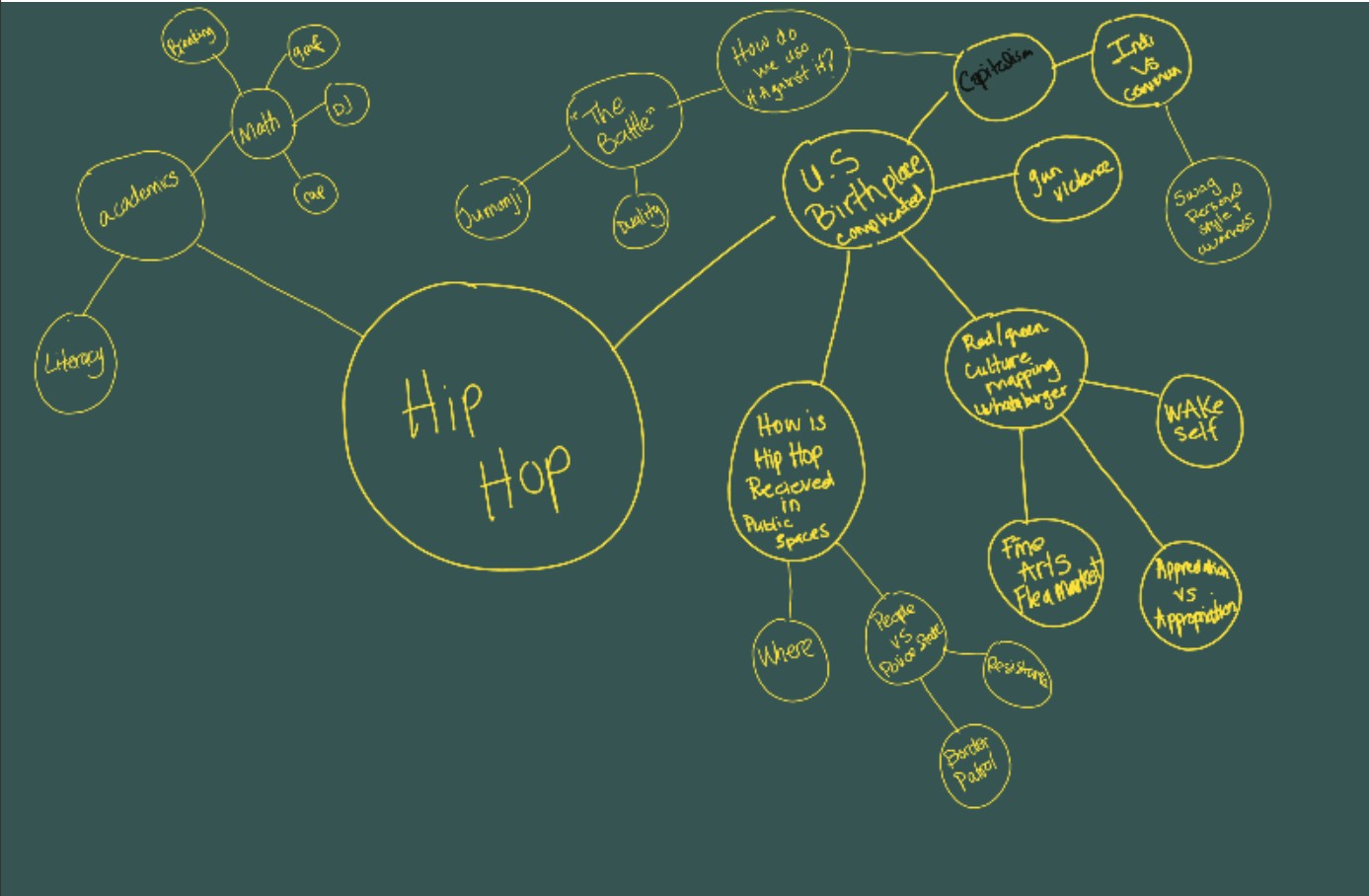
Discussion map of Hip Hop in the Borderlands with youth curriculum builders, June 2025.