A Culturally and Linguistically Relevant School: Escuela y Colegio Tonantzín
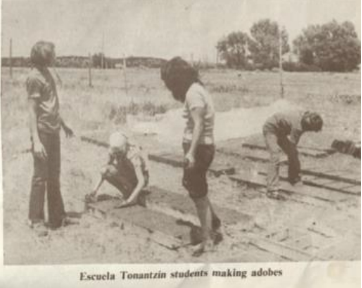
Escuela y Colegio Tonantzín was a school developed by community members in Santa Fe in 1973. It only operated for 3 months, from June to September that year, because it was destroyed and therefore, closed down by local and state police.
Although the school was short-lived, it is an important event in our state’s history because it demonstrates how peoples’ solidarity can lead to culturally and linguistically sustaining education that is land-based.
Escuela y Colegio Tonantzín demonstrates the strong working relationships people developed during the long Civil Rights Movement era to create a school on the platform of mutual aid. The idea of a Chicano, land-based educational system still lives within the Santa Fe community.
The school was community-based and grounded in Chicana/o culture, language, and land. Teachings centered on self-sufficiency driven by mutual aid. The idea of building an education system that honors a peoples’ culture and language is at the heart of Ethnic Studies work and this is a good example of how this is possible.
Unit Lessons
- Explore the history and significance of Escuela y Colegio Tonantzín to understand how culturally and linguistically relevant education emerged as a response to systemic inequities in New Mexico’s educational system. Begin by reviewing the “NM Compulsory Education” PowerPoint and engaging in class discussions to establish the historical and political background. Next, read selected articles from the Santa Fe New Mexican newspaper in small groups, identifying key information to create a PowerPoint or poster presentation. Using these articles, collaboratively build a timeline that traces the events and developments surrounding Escuela Tonantzín, organized by month. Analyze how the Santa Fe New Mexican presented the story of the school and write a short reflection on the newspaper’s framing and tone.
- Then, read and analyze how El Grito del Norte and El Grito Newsletter depicted the story of Escuela y Colegio Tonantzín. In groups, take notes on key details and compare these grassroots publications with the mainstream Santa Fe New Mexican. Discuss the differences in communication styles—how each source tells the story, what perspectives they highlight, and which approach feels more authentic or empowering. Reflect on whether grassroots newspapers exist in your own community and why they might be important. Consider how you might rewrite the story to make it more representative of community voices. Compare and contrast the reporting on the September 3, 1973 incident and the subsequent trial between the Santa Fe New Mexican and El Grito publications. Present your group’s findings to the class, explaining how each outlet shaped public perception of the event. Individually, write a creative piece imagining that you were a student at Escuela y Colegio Tonantzín during the summer of 1973—describe how you would report on the incident, including visuals or drawings to bring your narrative to life.
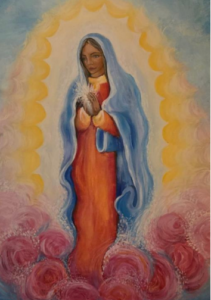
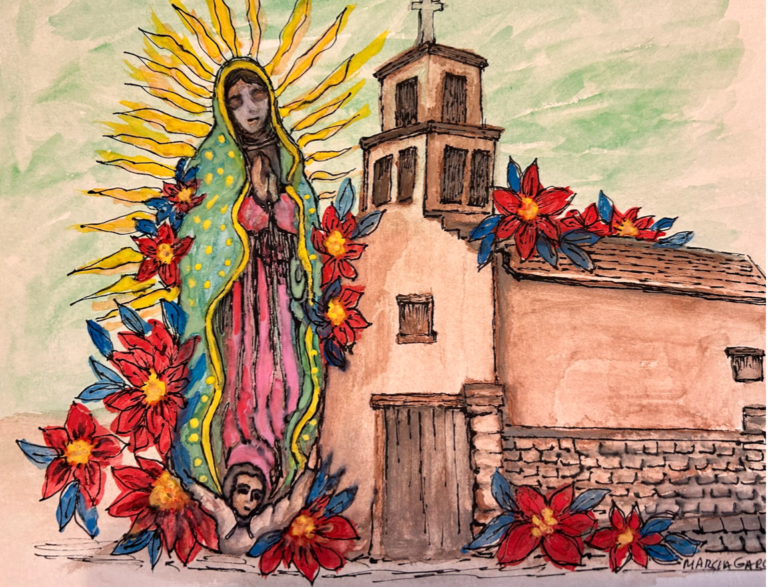
- Listen to oral histories and personal testimonies from people who were directly involved in the school, and reflect in groups on how their lived experiences reshape your understanding of the story. Read “Una Escuela del Pueblo: Escuela y Colegio Tonantzín” by Marisol O. Ruiz, observing the accompanying paintings and discussing their symbolism and meaning. Reflect on why the school was named Tonantzín, what it represents for the Chicano community, and what it means to you personally. Critically analyze Ruiz’s retelling of the story—did she capture the essence of the movement, or is something missing? How might you tell it differently?
- Finally, take time for deep reflection by writing about what you have learned regarding the educational and justice systems. Consider whether they are fair and why people in Agua Fria felt the need to create their own school. Reflect on whether similar movements could or should happen today and how this history has influenced your own perspective. Conclude by working in groups to design a multimodal presentation that imagines your own culturally and linguistically relevant school. Explain the purpose of your school, what makes it unique, what students would learn, and how it would better serve diverse communities compared to traditional systems.
Questions
- Compelling Question: What is compulsory schooling? Why does it exist? What are the consequences if we refuse to go to school? If we were not forced to go to school, then what would you do with all those hours spent in school?
- Staging the Question: What did they teach at Escuela y Colegio Tonantzin? Why do you think the police began shooting at the school? Why do you think this incident happened? Do you believe the police acted in the interest of people? Would you have wanted to be a part of Escuela y Colegio Tonantzin? Why or why not?
- Supporting Question 1: What is curriculum? Who decides what curriculum and content are taught in schools? Are we learning in a culturally sustaining way? Would you change what is being taught? Why or why not? If you could change what is being taught, then what would students learn?
- Supporting Question 2: Why did Escuela y Colegio Tonantzin want to change what is being taught in school? Why did they feel the need to have a Chicano school? What did they teach in that school? Why was this important for the community?
- Supporting Question 3: Why was the new Social Studies standard: Ethnic and Cultural Identities (ECI) introduced? Why is it important to learn about the land, language and culture? Do you see this in the curriculum you are being taught today? Why or why not? How have newspapers transmitted the news about your community and school? How does the story of Escuela y Colegio Tonantzin connect to current conversations about ethnic studies, cultural pride, race and racism?
New Mexico Social Studies Standards
HS New Mexico History: Theme 6: Civil Rights
History 15.
Historical Change, Continuity, Context, and. Reconciliation.
9-12.NMH.38. Analyze the civil rights era in New Mexico using multiple perspectives
Inquiry 26.
Communicate and Critique Conclusions.
9-12.NMH.7. Construct arguments using precise and knowledgeable claims, with evidence from multiple sources while acknowledging counterclaims and evidentiary weaknesses.
9-12.NMH.8. Construct explanations using reasoning, correct sequence, examples, and details with significant and pertinent information and data, while acknowledging the strengths and weaknesses of the explanations given their purpose
CIVICS
Civics 2.
Processes, Rules, and Laws
9-12.Civ.25. Evaluate sources to determine how people use and challenge local, state, national, and international laws to address a variety of public issues.
9-12.Civ.28. Evaluate the U.S. justice system over time and its impacts on policy, society, economics, and individual rights.
Civics 4.
Roles and Responsibilities of a Civic Life
9-12.Civ.37. Participate in civil discourse to promote greater understanding around historical, contemporary, and future opportunities and obstacles.
9-12.Civ.38. Use historical data and evidence related to various actors’ interests and motivations to determine their influence on contemporary issues