Political Public Art in Northern NM
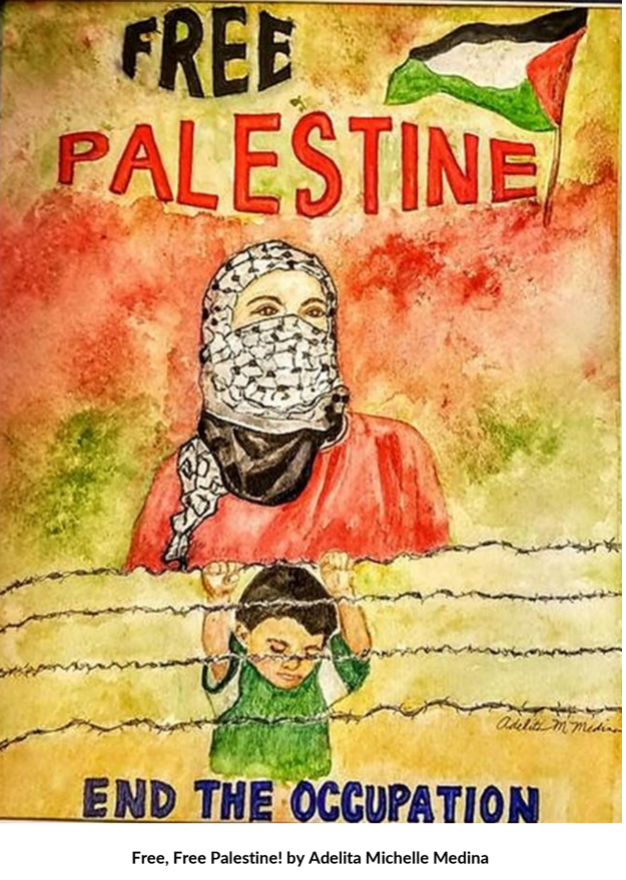
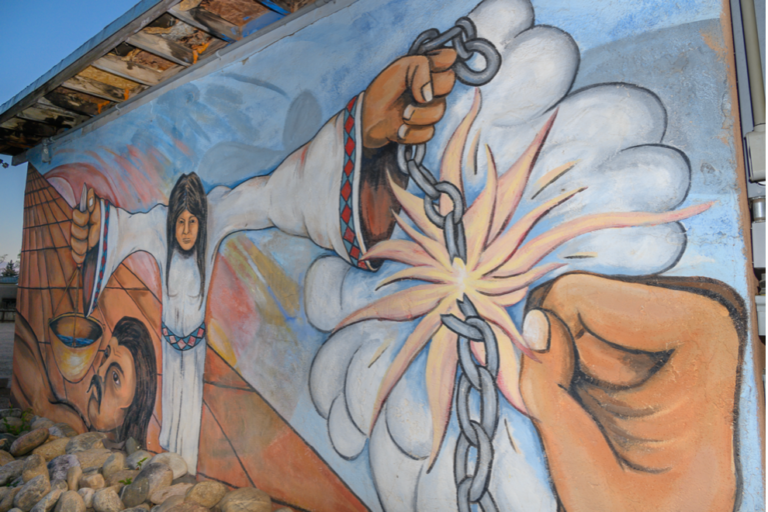
This Unit amplifies the significance of northern New Mexican artists who highlight the Chicana/o culture and social justice struggle through visual representation. Adelita Medina and Samuel Leyba were active members of the Chicana/o Movement in New Mexico, and continue to raise the importance of social justice in their art. They have painted on walls and on canvases, highlighting Chicana/o solidarity with others in their communities and across the world in shared struggles. They have both been public artists since the 1970s in Northern New Mexico and enjoy educating people through art. They continue to work with communities to integrate art into the ways we understand history and social movements.
Unit Lessons
- Study and analyze the political public art of Northern New Mexico by focusing on two influential artists, Adelita Medina and Samuel Leyba. Begin by learning about Adelita Medina, exploring her background, inspirations, and artistic journey. Analyze her artwork to uncover the messages she conveys through her creative expression—consider how her use of imagery, color, and symbolism reflects her political and cultural beliefs. Research the deeper meaning behind the political themes she portrays and the issues she addresses through her art. Present one of her paintings, explaining its historical significance and the message it communicates to the public, particularly in the context of social justice and cultural identity.
- Next, learn about Samuel Leyba and his contributions to Northern New Mexico’s political art scene. Examine his artwork closely to understand the messages he expresses and the causes he advocates for. Reflect on his art by interpreting what he aims to communicate to the public and how his pieces invite viewers to think critically about political and cultural realities. Listen to Leyba’s own explanation of his work to gain insight into his artistic intentions and the meaning behind his public art installations. Finally, present one of his art pieces, discussing its historical context and the broader message it conveys about community, resistance, and cultural pride within the region.
Questions
- Compelling Question: Is there a difference between political and public art? If so, what is the difference and why?
Why is political and public art important for a community and the broader world? - Staging the Question: What messages do you see Samuel Leyba and Adelita Medina conveying with their art? How? Why? Think about why this message is important for you and your community.
- Supporting Question 1: Why is political art important? Explain what political art means to you. Your community? The world?
Supporting Question 2: What issues do you want to educate people, your peers, community about? Why? How can you create mural, mosaic art that is both political and public?
New Mexico Social Studies Standards
Theme 9: Civil Rights and People Power Movements
Ethnic, Cultural, and Identity Studies 22. Community Equity Building
9-12.US.110. Investigate how identity groups and society address systemic inequity through individual actions,
individual champions, social movements, and local community, national, and global advocacy.
Theme 11: The United States in a Global Age (2008–Present)
9-12. US.127. Investigate how identity groups and society address systemic inequity through individual actions,
individual champions, social movements, and local community, national, and global advocacy.
9-12.US.128. Evaluate the role of racial social constructs in the structure and function of 21st-century U.S. society.
7th Grade Theme 1: The Land, People, and Resources of New Mexico
Ethnic, Cultural, and Identity Studies 20. Diversity and Identity
7.20. Analyze how groups maintain their cultural heritage and how we see this heritage through the symbols, traditions, and culture of our state.
7.22. Evaluate how society’s responses to different social identities lead to access and barriers for various demographic groups in relation to various societal institutions, including but not limited to education, healthcare, government, and industry.